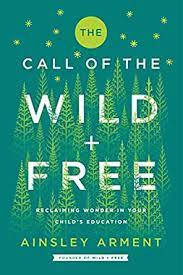
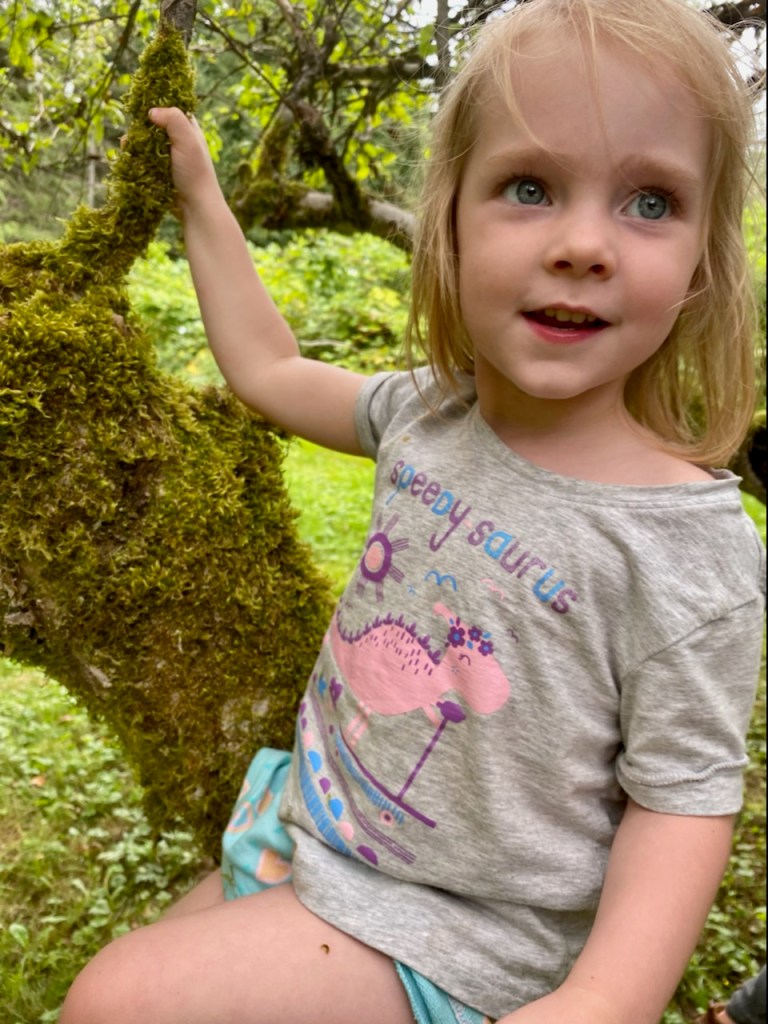
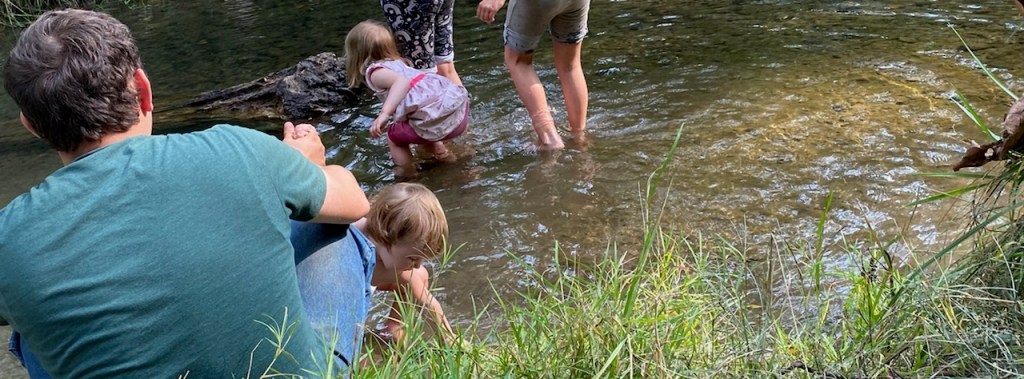
The Call of the Wild + Free is really big in the homeschool community at the moment. Wild and free are both words I use to describe my children, who can most often be found running around in various degrees of dirty, squealing happily. I picked up the book with this in mind, wondering in what direction the author, Ainsley Arment, would take the premise of raising wild and free children.
Arment begins by telling a story about sending her firstborn to school. After a couple of years in school, she says, “It wasn’t long before I noticed some changes… His disposition toward us changed. He seemed more distant. He became more interested in what other kids thought of him. He was losing his childlike innocence. I saw the light go out in his eyes… Also, I missed my boy… It didn’t seem right that strangers got to spend more time with my son than I did.” So, she pulled her son out of school and decided that home education was the right path for their family.
From here, Arment spends roughly the first half of the book talking about the benefits of homeschooling, emphasizing that mothers have the power to reclaim childhood in a world that has lost its wonder. I didn’t find this part very compelling, but I also read it as a homeschooled mother myself who has never had any doubt about the importance of home education! Her reasons are sound, and it’s a good refresher for mothers who find themselves doubting their decision to homeschool. For mothers who are uncertain about homeschool, it’s even more important to read! The only fault I have with it is that Arment’s tone in regards to public school sometimes comes across as condescending.
“Our children need our time, not our intelligence. They bloom with love, not perfect language skills. They need mercy, not intellectual mastery. And they will learn—indeed, truly learn—when they are given time to explore ideas without constant fact-checking and examination.”
The Call of the Wild + Free, Ainsley Arment
The second half of the book is dedicated to exploring different styles of homeschool. Arment gives a great summary of many of the most popular schools of thought: Classical, Montessori, Charlotte Mason, Waldorf, Reggio, and Unschooling. She discusses the historical context for each style, as well as its emphasis and variations. If I could pick up one book to help a new homeschooling parent sort out different philosophies in an accessible way, it would be The Call of the Wild + Free based on this section alone. Her further reading suggestions in the appendix are excellent, as well.
The conclusion of the book talks about Arment’s own style, the Wild + Free way. It also gives ideas for practical applications! Arment boils her philosophy down to five parts: Nature, Story, Play, Curiosity and Wonder. As a preschool parent, my application may look a bit different to parents of older students, but I have noticed that after reading The Call of the Wild + Free, I’ve found myself more intentionally incorporating each of these elements. It’s been a gentle, reaffirming call to parent in the here and now.
“Raising children is hard, full of twists and turns, missteps and mistakes, regrets and trying new things. But even on its most challenging day, homeschooling is really just an extension of parenting. Rest assured, there is no perfect school, classroom, teacher, mother, or homeschool. But we can do the best we can, one day at a time. And that’s good enough.”
The Call of the Wild + Free, Ainsley Arment
The Call of the Wild + Free is an invitation to cherish our children, protect childhood and wonder at the world we’ve been given. I recommend it to new parents as well as homeschool veterans who may just need some encouragement! I’ll be reading The Wild + Free Family next.
 Up the Mountain
Leave a comment